
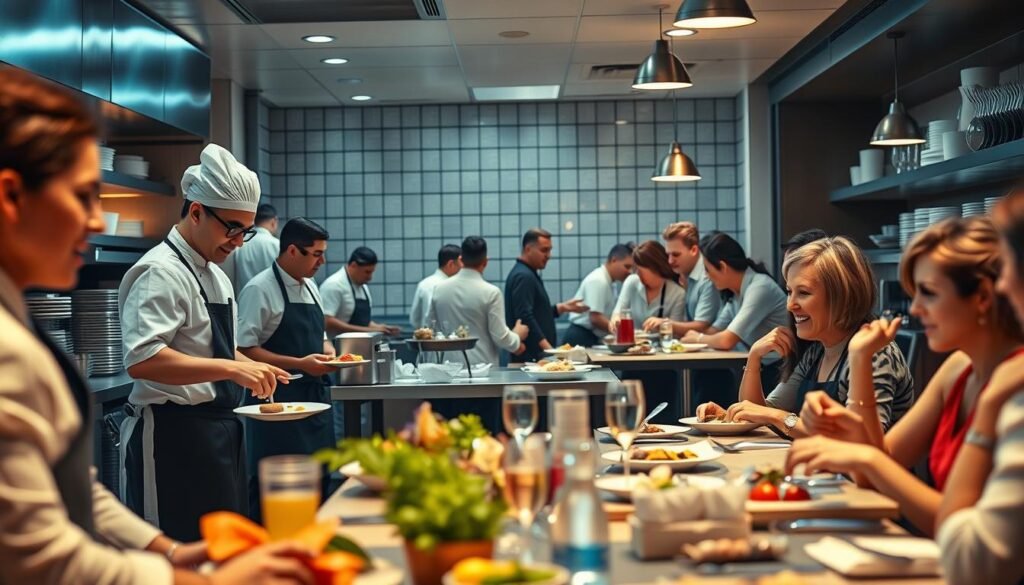
Studies show that cutting order response time by 30 seconds can boost customer satisfaction by up to 25%. This simple change can transform your team’s work and how guests feel about their meal.
Running a restaurant is all about juggling many tasks at once. Speed is key in every area. Quick responses, fast order processing, and quick problem-solving make daily operations smoother. When staff responds faster, customers are happier, tables turn over quicker, and your business grows stronger.
We’ll explore how faster response times boost efficiency, customer satisfaction, and service quality. This guide will show you real ways to speed up service without losing quality. We’ll cover training your team and using better technology.
These strategies work for any restaurant, big or small. We’ll look at point-of-sale systems and staff communication. You’ll learn how big names like Olive Garden and Chipotle use speed to stay ahead. We’ll share steps you can take today.
Our goal is to help you build a restaurant that runs smoothly. Fast, reliable, and focused on customers. Let’s see how faster response times can improve your bottom line and reputation.
Key Takeaways
- Faster response times boost customer satisfaction scores by 25% or more in most restaurants
- Quick order processing speeds up table turnover and increases profit during peak hours
- Staff training and clear communication protocols are the foundation of rapid service
- Technology tools like POS systems and mobile apps cut response time by 30 seconds or more
- Real-time inventory management prevents out-of-stock situations and menu delays
- Prompt responses to customer feedback build loyalty and strengthen your brand reputation
- How faster response times improve daily restaurant operations directly affects your revenue and guest retention
Understanding the Importance of Response Times
Response times are key to a great dining experience. They show how fast our staff meets customer needs. This includes everything from saying hello to handling payments.
Every second is crucial in the restaurant world. Delays can hurt your reputation and profits.
Good response times are the base for better restaurant efficiency. Restaurants that focus on speed attract more customers. They keep coming back for more.
Definition of Response Times in Restaurants
Response time is the time from when a customer asks for something to when it happens. It starts when guests arrive. It includes getting menus and waiting for food.
We look at response times in many ways:
- Greeting and seating delays
- Menu delivery wait periods
- Order taking duration
- Kitchen preparation time
- Food delivery speed
- Payment processing time
- Table turnover duration
Impact on Customer Satisfaction
Slow service makes customers unhappy right away. Waiting too long for service makes them feel ignored. Long waits for food lead to complaints and bad reviews.
Fast service makes customers happy. Quick responses make guests feel valued. Happy customers spend more and tell others about their good experience.
Relation to Overall Efficiency
Response times are linked to your restaurant’s success. Quick service means more tables can be used during busy times. This can increase profits without needing more staff.
We track response times to find areas for improvement. Slow greetings or long waits for food show problems. By fixing these, we make our restaurant better and happier for customers.
| Response Time Element | Industry Standard | Impact on Customers | Revenue Effect |
|---|---|---|---|
| Greeting and Seating | 2-3 minutes | Creates first impression | Positive experience starts journey |
| Menu Delivery | 1-2 minutes | Sets service pace expectations | Encourages longer dining sessions |
| Order Taking | 3-4 minutes | Shows staff attentiveness | Reduces order errors and remakes |
| Food Delivery | 12-18 minutes | Builds satisfaction and appetite | Increases order values and tips |
| Payment Processing | 3-5 minutes | Final impression of service | Enables faster table turnover |
| Table Clearing | 2-3 minutes | Shows preparedness for next guests | Maximizes seating capacity |
Understanding response times helps us make better restaurants. We know speed is important to our customers. By focusing on these, we create memorable dining experiences.
Speeding Up Order Processing
Getting orders to the kitchen fast is key for a successful restaurant. It makes customers happy and keeps staff efficient. We need to work well together from the front to the back of the house. This means no delays from when an order is placed to when it’s ready.
Modern restaurants face big challenges during busy times. Without the right systems, our teams can get overwhelmed. By improving how we handle orders, we can serve more customers without losing quality or making them wait too long.
Streamlining Communication with Staff
Good communication between servers and the kitchen is crucial. Our teams must understand orders clearly to avoid mistakes. When servers can quickly send orders to the kitchen, food is made faster.
We can avoid confusion by using simple language and checking details before sending orders. This makes sure everyone knows what to do.
- Use headsets or communication devices to keep teams connected
- Create standard order terminology that everyone understands
- Hold brief meetings to discuss order flow during busy shifts
- Train staff on how to prioritize orders based on complexity
Utilizing Technology for Quick Orders
Digital order entry systems are a big help for restaurants. They make it faster from when a guest orders to when the kitchen gets the ticket. Servers can enter orders on tablets or handheld devices, sending them straight to the kitchen display system.
Point-of-sale systems that integrate with kitchen displays help manage food preparation in real time. Chefs can see what needs to be made and in what order. This keeps things organized during busy times.
Reducing Wait Times for Customers
Customers like it when their food comes quickly. Shorter wait times make them happier and more likely to come back. We can make wait times shorter by:
- Taking orders as soon as customers sit down
- Preparing commonly ordered items in advance during slow periods
- Keeping kitchen staffing levels appropriate for expected rush times
- Setting realistic expectations about how long meals will take
- Communicating with customers about order status when delays happen
By working together and using smart tools, we make orders move faster through our restaurants. These improvements help us create a better experience for our customers in every dining moment.
Enhancing Customer Experience
When guests enter your restaurant, they look for more than just food. They want to feel valued and heard. Quick customer service turns ordinary meals into unforgettable experiences. Our team believes that speed and genuine attention are key to making guests happy and loyal.
Delivering personalized care quickly means knowing what each guest needs before they ask. Our staff learns to read tables, notice empty glasses, and anticipate questions. This shows guests we care about their dining experience.
Personalizing Interaction Through Quick Responses
Our team members use swift communication to connect with diners on a personal level. Quick responses make guests feel important. Staff training focuses on remembering details about regular customers and their preferences.
- Remembering guest names and favorite dishes
- Responding to requests within two minutes
- Making menu recommendations based on past visits
- Following up on special dietary needs immediately
Dealing with Customer Complaints More Effectively
Complaints are common in every restaurant. What sets us apart is our quick response to them. Our staff handles concerns with empathy and speed, turning frustration into satisfaction. We empower team members to solve problems without delays.
| Complaint Type | Response Time | Resolution Action |
|---|---|---|
| Food Quality Issues | Immediate | Replace dish without questions |
| Service Delays | Within 2 minutes | Offer beverage or appetizer |
| Temperature Problems | Instant | Return to kitchen immediately |
| Billing Errors | Before checkout | Correct and explain adjustment |
Creating a Positive Dining Atmosphere
A welcoming environment comes naturally when staff moves with purpose and attention. Our quick response approach reduces wait times and stress for guests. When guests feel acknowledged and served promptly, they relax and enjoy their meals more.
Speed and kindness together create an atmosphere where guests want to return. Our commitment to rapid, attentive service encourages repeat visits and positive word-of-mouth recommendations. Every interaction matters.
Managing Staff Effectively
Your restaurant’s success depends on teamwork under pressure. When staff knows their roles and talks clearly, service gets faster. A strong team culture makes quick responses a daily norm. This keeps customers happy and your business running smoothly.
Training Staff for Rapid Response
We focus on training that prepares employees for tough service situations. New staff learn standard procedures for orders, complaints, and requests. Regular training keeps everyone sharp and introduces new techniques.
- Role-specific training for servers, kitchen staff, and hosts
- Scenario-based practice for common customer situations
- Ongoing workshops to refresh skills and share best practices
- Mentorship programs pairing experienced workers with newer team members
Encouraging Team Collaboration
We know teamwork makes service faster and more efficient. When servers, cooks, and hosts work together, customers get quicker service. Team members who trust each other solve problems faster.
| Collaboration Strategy | Benefits | Implementation Time |
|---|---|---|
| Team huddles before shifts | Alignment on goals and expectations | 10-15 minutes |
| Cross-training across positions | Flexibility during busy periods | 2-4 weeks |
| Shared responsibility for customer satisfaction | Faster problem-solving responses | Immediate |
| Recognition programs for teamwork | Increased motivation and morale | Ongoing |
Implementing Clear Communication Protocols
We set up clear guidelines for instant information flow. When team members share updates on orders and customer needs quickly, service speeds up.
- Use standardized hand signals and verbal cues between front and back of house
- Establish a priority system for urgent requests and complaints
- Create written procedures posted in staff areas for quick reference
- Implement regular check-ins during service to address problems immediately
- Use order management systems that all staff can access in real time
Effective staff management is key to faster service. When your team knows their roles and communicates well, your operation becomes more responsive to customer needs.
Leveraging Technology for Faster Responses
Modern restaurants need smart tools to stay ahead. Technology helps us serve guests faster and better. Digital systems cut down on mistakes and speed up service.
They let staff focus on what matters most—making guests happy. When we use the right tools, reducing wait times becomes much easier. Our team can handle more orders without losing quality.
Today’s restaurant owners have access to powerful solutions. These tools change how we work every day. They make our kitchens run smoother and our guests wait less. Let’s look at three key technologies that make a real difference.
Point of Sale (POS) Systems
A good POS system is the heart of any restaurant. It connects your front desk to your kitchen instantly. Staff enter orders into tablets or terminals, and the kitchen sees them right away. No more paper tickets that get lost or hard to read.
Modern POS systems do much more than ring up sales. They track inventory, manage staff schedules, and gather customer data. Kitchen display screens show orders in real time. Cooks see exactly what guests ordered and when. This cuts confusion and speeds up food prep.
- Sends orders directly to kitchen screens
- Tracks inventory levels automatically
- Records customer preferences and habits
- Reduces manual order entry errors
- Works on smartphones and tablets
Mobile Applications for Orders
Guests love ordering from their phones. Mobile apps let customers browse menus, place orders, and pay without waiting. Staff spends less time taking orders and more time serving tables.
Apps also help with reducing wait times restaurants struggle with during busy hours. When guests order ahead through an app, the kitchen starts working right away. Food is ready when they arrive. This keeps tables turning faster and guests happier.
| Feature | Guest Benefit | Restaurant Benefit |
|---|---|---|
| Mobile Ordering | Order without waiting at counter | Kitchen prepares in advance |
| Digital Menu | Easily browse options and prices | Update menu items instantly |
| Loyalty Integration | Earn rewards on every order | Build repeat business |
| Payment Processing | Faster checkout experience | Reduce payment delays |
Use of AI Chatbots for Queries
Artificial intelligence chatbots answer common questions instantly. Guests ask about hours, allergies, reservations, or menu items. The chatbot responds right away, 24/7.
This frees up your staff to focus on serving. Your team isn’t stuck answering the same questions all day. Chatbots handle routine inquiries while people handle complex needs. Guests feel heard and helped quickly.
- Answers questions about menu items and ingredients
- Books reservations without staff help
- Provides allergy and dietary information
- Responds instantly at any time
- Learns from each guest interaction
Combining these three technologies creates a powerful system. Your restaurant moves faster. Guests spend less time waiting and more time enjoying. Staff works smarter, not harder. That’s how you build a restaurant that guests love to visit again and again.
Real-Time Inventory Management
Knowing what we have in stock is key to a smooth day in our restaurant. It helps our team work more efficiently. With real-time inventory, we can serve dishes without delay.
Our kitchen staff no longer waste time looking for items. They know what we can serve right away. This makes our operations run smoothly.
A good inventory system helps us serve customers fast. Our team can decide what to cook quickly. This keeps our customers happy.
Monitoring Stock Levels Efficiently
We use automated systems to track our inventory. These tools update stock levels as items move in and out. Our staff can check levels on tablets or phones.
This real-time view helps us plan better. We serve customers faster because of it.
- Automatic stock alerts when items run low
- Digital tracking of all food and supplies
- Quick access to inventory data from anywhere in the restaurant
- Clear records of what we use each day
Reducing Out-of-Stock Scenarios
Running out of items frustrates everyone. Real-time monitoring helps us avoid this. We order more before items sell out.
This keeps our menu consistent. Our customers stay happy.
Quick Adaptations to Menu Changes
Sometimes we need to change our menu. Real-time inventory lets us do this fast. Our staff updates the menu quickly.
Customers always see what we can serve. This keeps them informed and happy.
Handling Reservations Smoothly
Managing reservations is key to a successful restaurant. When we handle bookings well, guests feel valued and staff stays organized. Real-time systems help us track every reservation and walk-in customer easily. This keeps our team ready for any shift, no matter how busy.
A smooth reservation process starts before guests arrive. We use modern tools to confirm bookings quickly and keep customers updated on wait times. This approach prevents confusion and builds trust with our guests.
Importance of Timely Confirmation
Confirming reservations on time boosts customer satisfaction. Reaching out to guests before their visit shows we care. Quick confirmations help us plan which tables will be filled and which might be available for walk-ins.
Timely confirmation also cuts down on no-shows. Guests who get a reminder are more likely to show up or call us if plans change. This lets us offer those tables to other hungry customers waiting.
Utilizing Reservation Management Software
Modern reservation software keeps all our booking info in one place. We can instantly see guest preferences, party sizes, and special requests. These systems send automatic reminders, saving our staff time and reducing missed reservations.
| Feature | Benefit | Impact |
|---|---|---|
| Instant Booking Confirmation | Guests receive immediate confirmation | Reduces customer anxiety |
| Automated Reminders | Cuts down no-show rates | Increases table availability |
| Guest History Tracking | Personalized service options | Builds customer loyalty |
| Real-Time Seating Charts | Quick table assignments | Speeds up check-in process |
Managing Walk-Ins Effectively
Walk-in customers add extra business but can cause confusion. With real-time systems, our host stand knows which tables are opening up. This helps us seat walk-ins quickly and keeps wait times short.
- Check table status every few minutes
- Give accurate wait time estimates
- Offer seating at the bar if available
- Use a digital waitlist for large groups
- Communicate with kitchen staff about capacity
Smart management of walk-ins means we capture every dining opportunity. When our staff coordinates well and uses good systems, nobody leaves disappointed. This builds our reputation and brings customers back again and again.
Increasing Turnover Rates
We know that making your restaurant more profitable is all about using your space wisely. The table turnover rate is key to this. By being quick and efficient, we can serve more guests and make more money.
We mix smart service with guest comfort. We know rushing guests is not good. So, we use systems that help guests move on quickly without losing the fun of dining.
Boosting Table Turnaround with Quick Service
We make sure tables are ready for the next guests fast. Our team is trained to be quick and ready for guests. They do things like:
- Clearing plates right after guests finish
- Resetting tables with clean stuff
- Welcoming new guests in two minutes
- Handling payments fast and well
Maximizing Peak Hours Profitability
When it’s busy, we work even harder to be efficient. Our team works together to handle guests smoothly. We focus on managing tables well to make the most money.
Understanding Customer Flow Patterns
We study how guests move through our place to find slow spots. By looking at busy times and guest habits, we find where things slow down. This helps us adjust things to keep the flow smooth and the atmosphere great.
Effective Ordering Systems
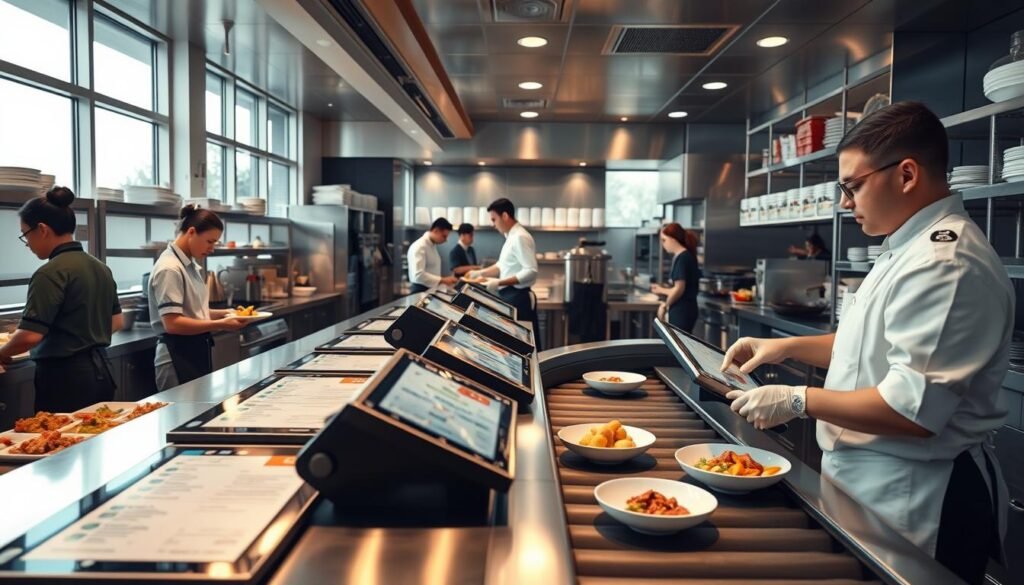
Modern restaurants need smart ordering systems to stay ahead. Customers want fast, accurate service, whether online, through apps, or at the counter. A good ordering system connects all these channels, making kitchen work smoother.
Our team makes sure orders get to the kitchen fast and right. This helps us serve customers better.
Online Ordering Platforms
We let customers order online from home or work. These platforms send orders straight to our kitchen. It saves us time and makes customers happy.
- Customers can browse our full menu anytime
- Orders go directly to kitchen staff
- Payment happens before pickup or delivery
- Customers receive real-time order status updates
Integration with Third-Party Delivery Services
We work with DoorDash, Uber Eats, and Grubhub. Our system treats delivery orders like in-house dining. This means every meal is fresh and on time, no matter how it’s ordered.
Enhancing In-House Ordering Experience
Our staff takes orders quickly with mobile tablets and updated POS systems. Customers feel valued when we respond fast. This leads to happier guests who come back.
| Ordering Channel | Response Time | Customer Benefit |
|---|---|---|
| Online Platform | 2-3 minutes to kitchen | Convenient ordering 24/7 |
| Third-Party Delivery | 3-4 minutes to kitchen | Wide audience reach |
| In-House Service | 1-2 minutes to kitchen | Immediate personal service |
Building Customer Loyalty
Creating strong relationships with customers is more than just serving great food. Quick responses to feedback and engaging online build trust. This trust keeps guests coming back for more.
Loyal customers spend more and share their experiences with others. To build loyalty, we must be present and responsive online. This shows we value their opinions and care about their experience.
Prompt Responses to Feedback
Responding to online reviews and messages within hours is key. Quick replies show we listen to what people say. Whether it’s good or bad, a timely response shows we take our guests seriously.
- Address complaints within 24 hours
- Thank customers for positive reviews
- Offer solutions to problems right away
- Show appreciation for constructive criticism
Engaging with Customers on Social Media
Social media platforms like Facebook, Instagram, and TikTok connect us with our audience. We should post updates, share photos, and respond to comments and messages quickly. Quick answers to questions keep them interested.
Active social media engagement builds a community around your restaurant. We can use these platforms to announce special events, showcase new dishes, and celebrate customer milestones.
Offering Loyalty Programs for Quick Engagement
Loyalty programs reward regular visitors. By making these programs easy to use and offering instant rewards, we encourage repeat visits. Mobile apps and digital cards make tracking points and redeeming benefits simple.
| Program Feature | Benefit to Customers | Benefit to Restaurant |
|---|---|---|
| Points for Every Purchase | Earn rewards faster with each visit | Increases repeat business and sales |
| Birthday Specials | Receives exclusive discount on birthday | Brings customers in during slow periods |
| VIP Member Status | Gets priority seating and special perks | Creates brand ambassadors and advocates |
| Instant Digital Redemption | Applies rewards immediately at checkout | Streamlines transactions and speeds service |
| Exclusive Menu Access | Try new dishes before general public | Gathers feedback and builds excitement |
Quick engagement through loyalty programs keeps customers thinking about us. When rewards are easy to earn and fun to use, customers feel valued. This positive feeling turns casual diners into dedicated patrons who recommend us to others.
“The customer’s perception is your reality.” — Kate Zabriskie
By staying responsive across all channels and rewarding loyalty instantly, we create lasting connections with our guests. These relationships drive business growth and build a strong community around our restaurant.
Analyzing Response Time Metrics
Knowing how fast your restaurant answers customer needs is key to success. We track our service speed through various data points and analytics. These help us see our strengths and areas for improvement.
By focusing on the right metrics, we make informed decisions. This keeps our operations running smoothly.
Key Performance Indicators for Response Times
We look at specific numbers to understand our service speed. These indicators show us how our restaurant performs daily. The metrics we track include:
- Average time from order placement to food preparation start
- Time customers wait for their check after finishing their meal
- How long it takes staff to respond to customer calls or requests
- Speed of seating guests after they arrive
- Duration of table turnover between customers
Tools for Tracking Time Metrics
We use modern software to collect and analyze our response time data. Tools like Toast and MarginEdge help us monitor these important numbers in real time. These tools reveal patterns and trends we might miss otherwise.
We can see which shifts are busiest and when customers wait the longest.
| Tracking Tool | Primary Function | Time Data Captured |
|---|---|---|
| Point of Sale System | Order management and payment processing | Order to completion time |
| Kitchen Display System | Food preparation coordination | Prep time from order to ready |
| Reservation Software | Table management and seating | Wait time until table assignment |
| Customer Feedback Platform | Service quality assessment | Response time perception scores |
Regular Assessment of Performance
We review our metrics weekly and monthly to spot trends. This helps us understand what works well and what needs attention. We discuss the numbers in team meetings and plan improvements.
When we see response times getting slower, we investigate the cause right away. Our assessments guide us toward better staffing schedules and process changes. We compare our current performance against our previous months to measure growth.
This data-driven approach keeps our restaurant competitive and our customers happy.
Continuous Improvement Strategies
Creating a restaurant that works smoothly is not just about one good day. We know that to stay ahead, we must always look for ways to improve. Our dedication to excellence pushes us to set clear goals and build systems that keep our team sharp.
By focusing on what works and changing what doesn’t, we foster a culture where speed and quality are both key. This approach ensures that our restaurant runs efficiently and effectively.
Setting Goals for Response Times
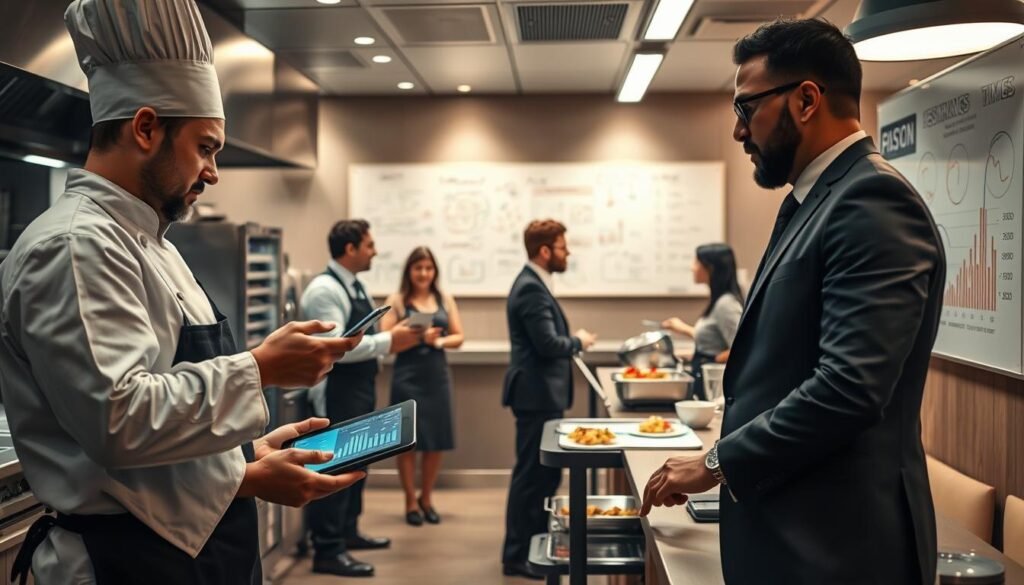
We first decide what fast means for our restaurant. Setting specific targets helps our team know what to aim for each day. Goals give us a clear goal to work towards.
- Define target times for taking orders at the counter
- Create benchmarks for serving drinks and appetizers
- Establish timelines for resolving customer complaints
- Set standards for answering phones and online messages
Training Programs for Staff Development
Our team members need the right skills to meet these goals. We invest in training that keeps everyone sharp and confident. Strong employees are essential for fast service.
- Hold weekly team meetings to review performance data
- Teach new staff the systems that work best
- Practice handling rush hour scenarios
- Share success stories from top performers
Implementing Customer Feedback Mechanisms
Our guests give us valuable feedback on what we’re doing well and where we can improve. We listen to every comment, complaint, and compliment. This feedback guides us and keeps us focused on what our customers value most.
- Send short surveys after each visit
- Monitor online reviews and respond quickly
- Host monthly focus groups with loyal customers
- Create easy ways for staff to report guest concerns
Case Studies: Successful Restaurants
Real-world examples show how restaurants improve by focusing on speed and efficiency. These businesses prove that quick responses lead to better service in all areas. We can learn from their strategies to improve our own restaurants.
Examples of Restaurants with Fast Response Times
Chipotle Mexican Grill changed fast-casual dining with a streamlined order process. Their assembly-line method means meals in minutes. The Cheesecake Factory cut wait times with digital management.
Panera Bread’s mobile apps halved pickup times. These brands show speed doesn’t mean sacrificing quality.
Local pizza chains like Blaze Pizza use quick-service models. Their team works in stations to prepare orders fast. Starbucks improved with mobile apps and drive-through optimization. These examples show speed improvements work for different types of restaurants.
Outcomes of Improved Operational Efficiency
When restaurants focus on fast responses, customer satisfaction soars. Studies show a 15-20% increase in satisfaction with just a 30-second order time cut. Revenue grows as table turnover rates improve during busy times. Staff morale also improves when operations run smoothly.
| Restaurant Brand | Response Time Improvement | Customer Satisfaction Increase | Revenue Growth |
|---|---|---|---|
| Chipotle Mexican Grill | Reduced order time to 4 minutes | 22% increase | 18% annual growth |
| Panera Bread | Mobile orders fulfilled in 3 minutes | 28% increase | 12% quarterly increase |
| Blaze Pizza | Custom pizza ready in 2 minutes | 25% increase | 20% annual growth |
| Starbucks | Mobile pickup in under 2 minutes | 31% increase | 15% same-store sales growth |
Lessons Learned from Industry Leaders
These successful restaurants teach us valuable lessons about operational excellence:
- Invest in technology wisely – POS systems and mobile apps deliver real returns
- Train staff consistently – Employees need clear procedures and regular practice
- Simplify menus strategically – Fewer items mean faster prep times
- Monitor metrics daily – Track response times to identify bottlenecks
- Gather customer feedback – Use reviews to guide improvements
Success comes from combining technology, training, and a focus on speed. These leaders show that fast service builds loyal customers and stronger profits.
Conclusion: Embracing Speed for Success
Speed is key in the restaurant world. We’ve explored ways to make your operations faster and better. Using modern POS systems and managing staff well are crucial. Quick responses build strong customer relationships and boost profits.
Final Thoughts on the Importance of Faster Responses
Today’s successful restaurants act fast. Quick order responses, complaint handling, and team efficiency impress customers. They return more often and share their positive experiences.
Encouragement to Implement Changes for Improvement
It’s time to take action. Start with one or two changes from this article. Maybe add a mobile ordering app or train your team. See how improvements boost your business.
Invitation to Connect for Assistance
We’re here to support you. If you have questions or want to explore new opportunities, reach out. Send a WhatsApp message to (917) 995-2995. Visit our Airbnb opportunity here: https://www.airbnb.com/rp/angelg31511?p=stay&s=67&unique_share_id=3c25b017-7512-4e24-a7ae-70c3d7488f05.