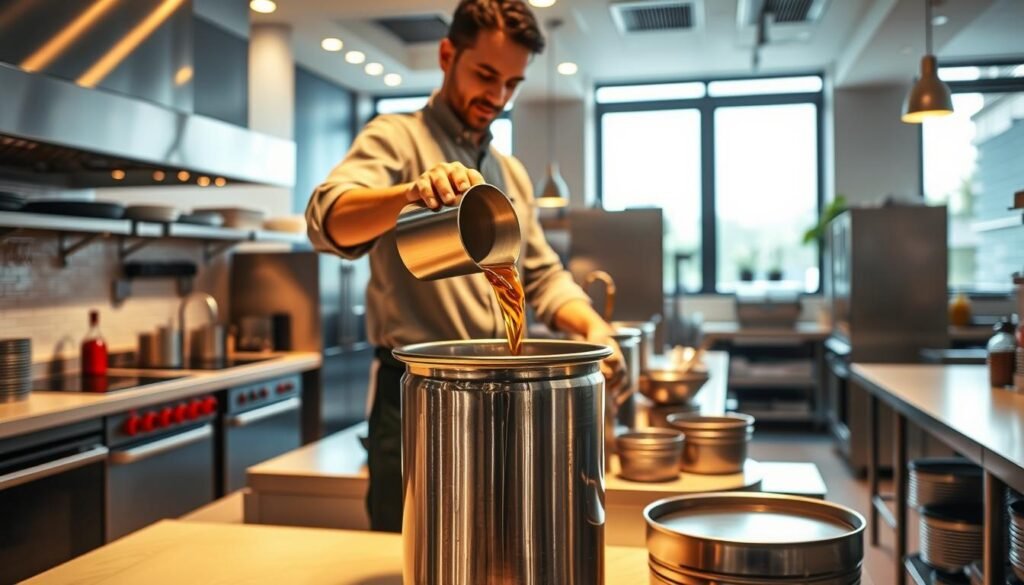
Managing cooking oil in your restaurant is more than just getting rid of waste. It’s about having a complete system that protects your business, community, and saves money. Every day, kitchens deal with huge amounts of used cooking oil.
Understanding reliable oil collection for modern restaurants is complex. It needs careful planning, attention to detail, and a commitment to doing it right. When you do it well, your kitchen runs better and cleaner.
Many restaurant owners feel lost about managing oil. The rules keep changing, and there are many equipment options. Your staff also needs training. But, there are solutions to these challenges. Getting your oil collection right makes a big difference in your kitchen every day.
Key Takeaways
- Reliable oil collection systems protect your restaurant from environmental penalties and health code violations
- Proper oil management reduces pest problems and keeps your kitchen cleaner and safer
- Well-organized oil collection saves money through efficient disposal and potential oil recycling
- Regular maintenance of your oil collection equipment extends its lifespan
- Your staff needs clear training on oil disposal procedures to prevent problems
- Partnering with certified oil collection providers ensures you meet all legal requirements
- A strong oil management system shows customers that your restaurant cares about the environment
Understanding the Importance of Reliable Oil Collection
Managing cooking oil waste is crucial for restaurants. It’s more than just getting rid of used oil. It’s about protecting our environment, keeping staff safe, and saving money. Proper oil management is key for our business and community’s future.
The Environmental Impact of Oil Waste
Bad oil disposal harms our waterways and ecosystems. Oil clogs pipes and damages infrastructure. But, recycling oil into biodiesel helps our environment and creates energy.
Working with oil collection services turns waste into a resource. They pick up oil before it pollutes our environment.
Health and Safety Compliance
Grease and oil in kitchens are hazards. Regular maintenance prevents fires and slip hazards. This keeps our kitchen safe for everyone.
Following best practices for oil collection reduces injuries. It makes our kitchen a safer place for all.
Economic Benefits of Efficient Oil Management
Investing in oil recycling saves money. Here are the benefits:
- Less money for plumbing repairs
- Lower utility bills
- Money from selling used oil
- Less fines for environmental issues
- Longer equipment life
| Waste Management Approach | Annual Cost per Restaurant | Environmental Impact | Compliance Risk |
|---|---|---|---|
| No organized system | $3,500–$5,200 | High pollution | Very High |
| Basic in-house disposal | $2,100–$3,800 | Moderate pollution | High |
| Professional oil collection services | $800–$1,500 | Minimal pollution | Very Low |
Using oil collection services saves money in the long run. We get maintenance savings and can sell oil. The benefits far outweigh the initial cost.
Key Components of an Oil Collection System
A good restaurant oil collection system needs three main parts. We must have the right tanks, proper filtration, and regular maintenance. Each part is crucial for managing waste and protecting our equipment.
Types of Oil Collection Tanks
We use special containers for disposing of commercial cooking oil. These containers meet our kitchen’s specific needs. The main types are:
- Above-ground tanks for easy access and monitoring
- Underground tanks for storing more oil and saving space
- Mobile collection containers for flexible services
- Grease interceptor systems to catch waste before it clogs our pipes
Choosing the right tank depends on our kitchen’s size, waste volume, and available space. Professional recycling programs work best with tanks that fit our daily needs.
Effective Filtration Methods
Clean oil helps our equipment last longer and supports sustainable waste management. We use multi-stage filters to remove food particles and contaminants. This keeps our recycling programs running smoothly and ensures we follow best practices.
Essential Maintenance Practices
Regular maintenance of grease traps prevents backups and system failures. We do routine checks and cleanings to keep everything in top shape. Working with scheduled oil pickup services helps avoid overflow. Regular maintenance also supports our grease management solutions and keeps our kitchen safe and up to code.
Choosing the Right Equipment for Our Restaurant
Choosing the right equipment is key for modern restaurants. We need to match our kitchen’s needs with the right solutions. This choice affects how we handle cooking oil disposal and waste.
Our decision-making process is important. It impacts both efficiency and compliance. We must consider several factors carefully.
Factors to Consider When Selecting Equipment
When looking at cooking oil disposal systems, size and cooking volume matter. Different restaurants produce different amounts of used oil. We also need to think about storage space for tanks.
Quality and durability are crucial. We want equipment that lasts without needing repairs. The materials used affect how long it will last. We need to balance costs with long-term value.
- Kitchen square footage and cooking volume
- Available storage space for collection tanks
- Compatibility with existing kitchen layout
- Durability and material quality
- Ease of operation for staff members
- Safety features and compliance standards
Leading Brands in Oil Collection Solutions
Many reputable manufacturers offer great solutions for managing grease. Watts Water Technologies has reliable collection systems for commercial kitchens. Drain Care offers sustainable waste management products that fit well with restaurant operations. Grease Guardian specializes in automated oil handling systems.
We should also look at professional oil recycling programs. Companies like Ceres Inc. and Western Dubuque Biodiesel work with restaurants. They ensure proper handling of used cooking oil and offer scheduled pickup services.
| Brand | Primary Focus | Key Features | Best For |
|---|---|---|---|
| Watts Water Technologies | Grease Interceptors | Heavy-duty construction, high capacity | Large-volume restaurants |
| Drain Care | Complete Waste Management | Automated systems, easy maintenance | Mid-sized establishments |
| Grease Guardian | Automated Collection | Temperature control, minimal staff interaction | High-speed kitchens |
| Ceres Inc. | Oil Recycling Services | Regular pickup, sustainability focus | Eco-conscious restaurants |
Innovation and Technology in Oil Management
Modern technology changes how we manage oil in our kitchens. Smart systems alert us when tanks are full, preventing spills. This makes our work more efficient and reduces the need for constant monitoring.
Automated systems now track oil quality and temperature in real-time. This data helps us decide when to request oil pickup. Integrating with our point-of-sale systems gives us insights into cooking patterns and oil usage.
Investing in quality technology keeps our kitchen clean and safe. Advanced systems extend oil life and reduce waste. These improvements support our commitment to sustainability and keep our team safe.
By working with providers of professional oil recycling programs, we get the latest solutions. This partnership ensures our equipment meets industry standards and regulations.
Best Practices for Oil Collection in Modern Kitchens
Reliable oil collection in modern restaurants is more than just cleaning up. It involves a detailed plan that includes daily checks, training staff, and caring for the environment. Our restaurant knows that starting with clear procedures is key. This way, every team member can follow the same steps every time.
Regular Monitoring and Maintenance
We check our oil collection systems every day to make sure they work right. Our team looks at the grease traps daily to find any problems early. This helps avoid big issues and keeps our kitchen running well.
- Check oil levels in collection containers each shift
- Inspect grease traps for blockages or buildup
- Test filtration systems for proper function
- Document all maintenance activities in a log
- Schedule professional inspections monthly
Training Staff for Effective Oil Disposal
Our kitchen staff gets regular training on oil collection. We believe that well-trained employees are crucial for success. They learn how to handle oil safely and responsibly through our training.
We hold workshops every quarter. These cover how to handle oil, safety, and the value of recycling programs. Staff know their actions affect our environmental impact and compliance.
Implementing a Culture of Sustainability
Our approach to grease management shows our commitment to the environment. We’ve made sustainability a part of our daily work. Employees get praised for following the right procedures and helping with waste management.
| Practice Area | Our Implementation | Expected Outcome |
|---|---|---|
| Oil Segregation | Separate cooking oils from meat drippings | Higher quality material for professional oil recycling programs |
| Container Labeling | Clear labels on all collection containers | Reduced cross-contamination during commercial cooking oil disposal |
| Schedule Adherence | Strict collection schedule with backup systems | Consistent compliance with grease trap maintenance for restaurants |
| Staff Accountability | Performance reviews based on compliance metrics | Higher engagement in sustainable kitchen waste management |
Sustainability isn’t a side project—it’s how we operate every day. Our dedication to grease management makes reliable oil collection our standard practice.
The Role of Regulations in Oil Collection
Running a food service business means knowing the laws about waste management. These laws help protect our environment, public health, and our business. Following oil collection rules is key to being a responsible business. It keeps our kitchens safe and protects our community.
Overview of Federal and State Guidelines
Federal laws set the base for managing cooking oil and grease. The Environmental Protection Agency (EPA) makes rules that all states must follow. These rules cover storage and disposal methods.
States then make their own rules that are often stricter. Knowing these rules helps us follow the law at all levels.
We focus on the best practices for oil collection. Grease trap maintenance is required by federal law, with rules varying by location. We follow EPA guidelines for sustainable waste management. We also keep up with changes in state laws that affect our business.
Understanding Local Compliance Requirements
Local areas often have the toughest rules for oil collection. City and county codes are based on local conditions and infrastructure. Our local health department checks if we follow all the rules.
They decide how often we need to service our equipment and how we document our disposal. These rules help protect our environment.
| Regulatory Level | Key Requirements | Enforcement Agency | Typical Inspection Frequency |
|---|---|---|---|
| Federal | Waste disposal standards, environmental protection guidelines | EPA (Environmental Protection Agency) | As needed for investigations |
| State | Oil disposal methods, storage regulations, reporting requirements | State Environmental Agency | Annually or bi-annually |
| Local | Grease trap cleaning frequency, collection schedules, documentation | Health Department, City Officials | Quarterly to semi-annually |
Our grease management solutions must meet local codes. We work with certified providers who know our area’s rules. Keeping detailed records helps us pass inspections. It shows our commitment to proper waste handling.
- Review local ordinances at least twice yearly
- Maintain detailed records of all service visits
- Schedule grease trap maintenance according to local requirements
- Train staff on compliance procedures
- Partner with licensed disposal companies
Knowing the rules helps us avoid fines and keeps our reputation strong. We invest in professional oil collection services. This shows our values and strengthens our community ties.
How to Integrate Oil Collection with Daily Operations
Adding waste management to your daily tasks shows what reliable oil collection means for modern restaurants. When oil disposal fits into kitchen routines, your staff can focus on cooking. Everyone works better when they know their part in the process.

Good restaurant oil collection services make your whole operation better. Your kitchen team follows clear steps that cut down waste and cleaning time. This lets them focus on making great food for your customers.
Scheduling Regular Collection Services
Regular oil pickups keep your kitchen running smoothly. Choose times that fit your busiest hours. Most restaurants do well with weekly or bi-weekly pickups, based on how much oil they use. Working with providers who know your schedule helps avoid problems and keeps your grease trap in good shape.
- Weekly pickups for high-volume kitchens
- Bi-weekly service for medium-sized restaurants
- Custom schedules based on your cooking volume
- Emergency same-day collection when needed
- Flexible rescheduling around special events
Streamlining Oil Disposal Processes
Oil disposal works best when your team knows what to do. Make sure there are clear drop-off spots near cooking areas. Teach your staff which oils go where and why it’s important to avoid contamination.
Keep disposal quick and easy. When cooks can dispose of oil in under a minute, they will do it often. Train them on the right pouring techniques to avoid spills. Make the right choice the easiest one for your team.
Using Technology for Operational Efficiency
Modern tech changes how you manage oil collection. Digital scheduling reminds you of pickup days. Mobile apps let your staff report when containers are full. Some systems even track your oil disposal costs in real time.
| Technology Feature | How It Helps Your Restaurant | Time Savings |
|---|---|---|
| Automated Scheduling | Pickups happen on your preferred days without manual booking | 30 minutes per month |
| Mobile Alerts | Staff knows when containers are nearly full before overflow occurs | 15 minutes per week |
| Digital Records | Track disposal compliance and costs automatically | 20 minutes per week |
| IoT Sensors | Real-time monitoring prevents emergency situations | 40 minutes per month |
Your restaurant gains control over operations when technology handles routine tracking. You spend less time on paperwork and more on growing your business. Integration tools connect your oil collection system with your general management platform. This unified approach reduces errors and keeps everything organized.
When you combine scheduled oil pickup services with smart technology, your restaurant operates at peak efficiency. Your team stays focused on excellence while reliable systems handle the details behind the scenes.
The Cost of Ignoring Proper Oil Collection
Not managing waste properly in our commercial kitchen can cause big financial and legal problems. Not using reliable restaurant oil collection services and commercial cooking oil disposal systems can lead to expensive repairs and health code violations. It can even cause our kitchen to shut down. Knowing these risks helps us make better choices for our restaurant’s future.
Long-Term Financial Implications
Not managing oil can lead to a chain of costly problems. Regular grease trap maintenance for restaurants can prevent emergency repairs that cost thousands of dollars. Without regular maintenance, grease can harden in pipes and cause blockages.
The financial impact includes:
- Emergency plumbing repairs costing $2,000 to $5,000 per incident
- Kitchen closure periods that reduce revenue
- Equipment replacement expenses from corrosion damage
- Increased insurance premiums after violations
- Lost customer trust due to health code failures
Using scheduled oil pickup services and restaurant grease management solutions is much cheaper than dealing with emergencies. Investing in preventive care saves our money and keeps our kitchen running well.
Risks of Non-Compliance
Health departments have strict rules for oil disposal. Not following these rules can lead to serious penalties.
| Violation Type | Potential Fine | Business Impact |
|---|---|---|
| Improper oil disposal | $500 to $2,000 | Health inspection failure |
| Clogged grease traps | $1,000 to $5,000 | Kitchen shutdown |
| Environmental violations | $5,000 to $25,000 | Legal action and reputation damage |
| Repeated violations | $10,000 plus | Business closure or license revocation |
By using professional restaurant oil collection services and keeping up with oil pickup schedules, we avoid these big penalties. Our commitment to proper waste management keeps our business safe and helps our community.
Case Studies of Successful Oil Management
Real-world examples show us what reliable oil collection looks like for modern restaurants. Leading establishments across the United States have transformed their operations. They have done this by embracing comprehensive waste management strategies.
These success stories show that restaurants benefit a lot when they commit to professional oil recycling programs. They also benefit from sustainable kitchen waste management practices.
We can learn valuable insights from businesses that have implemented these systems effectively. Their experiences show the direct connection between operational excellence and environmental responsibility.
Restaurants That Excel in Oil Collection
Top-performing establishments see restaurant oil collection services as a core business investment. They have found that scheduled oil pickup services streamline daily operations. This reduces waste disposal complications.
By partnering with certified providers, they maintain compliance while supporting environmental goals.
Leading food establishments understand that food service oil collection best practices include:
- Establishing clear protocols for kitchen staff regarding oil disposal
- Scheduling regular collection appointments to prevent overflow
- Maintaining detailed records of oil waste volumes
- Training employees on proper handling procedures
Lessons Learned from Industry Leaders
We have observed that successful restaurants share common approaches. They view professional oil recycling programs as integral to their brand identity. Not just as compliance checkboxes.
These industry leaders report improved efficiency, reduced operational costs, and stronger community relationships. Their commitment to sustainable kitchen waste management creates competitive advantages.
Customers increasingly support restaurants that demonstrate environmental responsibility. This makes these practices valuable for reputation and profitability.
| Key Success Factor | Impact on Operations |
|---|---|
| Regular scheduled oil pickup services | Prevents equipment damage and maintains kitchen flow |
| Professional oil recycling programs | Ensures compliance and reduces environmental harm |
| Staff training on food service oil collection best practices | Improves safety and reduces disposal errors |
| Partnership with certified providers | Guarantees quality service and reliable documentation |
We understand that implementing these strategies requires planning and commitment. Restaurants that excel in oil collection view this responsibility as essential. They see it as key to their operational success and community contribution.
Impact of Reliable Oil Collection on Reputation
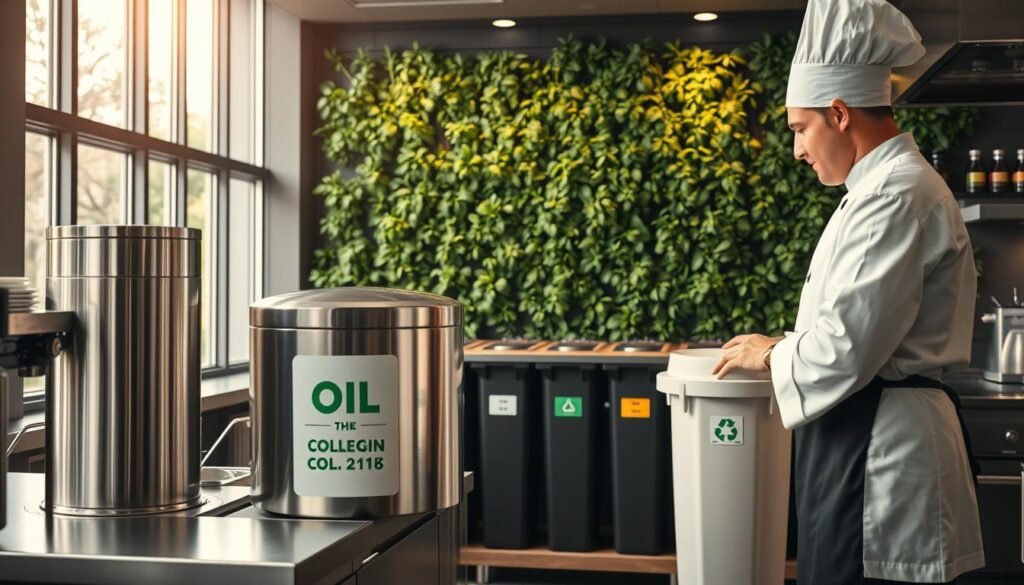
Our restaurant’s focus on the environment affects how people see our brand. Today’s diners want to know where their food comes from and how restaurants operate. By showing what reliable oil collection means, we share our values. Our customers see that we’re not just serving food—we’re also protecting our community and the planet.
How we handle waste shows a lot about our business. More and more, customers choose restaurants that care about the environment. By using professional oil recycling and keeping grease traps clean, we show we’re serious about being green. This honesty builds trust that goes beyond just eating out.
Customer Perception and Brand Trust
Today, people look for businesses that care about the planet. When we follow the best practices for oil collection, people talk about it. Customers feel good supporting a restaurant that cares about the environment. This makes them loyal, something money can’t buy.
- Transparent waste management builds customer confidence
- Eco-friendly practices attract conscious consumers
- Environmental commitment strengthens brand identity
- Positive reputation leads to repeat business
- Word-of-mouth marketing grows naturally
Positioning Our Restaurant as Eco-Friendly
We stand out by showing our commitment to the environment. Our investment in oil recycling shows we lead in environmental efforts. By sharing these efforts, we draw in customers who value responsible businesses.
Our focus on proper oil collection makes us leaders in sustainability. This reputation brings in eco-conscious diners, media attention, and partnerships. We’re not just following rules—we’re setting examples for the food industry.
Collaborating with Oil Collection Service Providers
Finding the right partner for our restaurant oil collection services is key. We need companies that get our needs and provide reliable service every day. A good partnership lets us focus on cooking while knowing our waste is handled well.
Working with providers who specialize in commercial cooking oil disposal gives us peace of mind. We look for partners who take our grease management seriously and treat us like family.
Choosing the Right Service Partner
When searching for restaurant oil collection services, we must consider several factors. It’s important to know if the company knows our area and local laws. Reading reviews and asking for references helps us make a good choice.
We should ask about their recycling programs and how they handle our oil. Do they recycle responsibly? Can they show us they follow the rules? These questions are crucial for our business.
- Verify licensing and insurance coverage
- Ask about their professional oil recycling programs
- Request references from current restaurant clients
- Check response times for emergency situations
- Confirm they follow environmental regulations
Negotiating Service Contracts
After finding a good partner, we need to negotiate a contract. Clear agreements about pickup services protect both sides. We should talk about pricing, how often they pick up, response times, and extra collection needs.
Our contract should detail what commercial cooking oil disposal includes. Will they provide tanks? Who pays for maintenance? What are the payment terms? Getting these details in writing avoids confusion later.
| Contract Element | What to Discuss | Why It Matters |
|---|---|---|
| Pickup Frequency | Weekly, twice weekly, or as needed | Prevents overflow and keeps kitchen clean |
| Response Time | Emergency pickup availability | Handles unexpected situations quickly |
| Pricing Structure | Per pickup or monthly flat rate | Helps us budget and control costs |
| Tank Maintenance | Who handles repairs and cleaning | Keeps equipment working properly |
| Environmental Compliance | Documentation and recycling practices | Protects us from legal issues |
When negotiating, we should ask about volume discounts for multiple locations. We can also discuss service guarantees. A reliable partner will stand behind their work. We want dependable pickup services every week.
Building a strong partnership with our oil collection provider is a win-win. They get a steady customer, and we get reliable service that keeps our restaurant running smoothly and responsibly.
Technology in Oil Collection
The restaurant industry is seeing big changes in waste management. New smart systems and digital tools are changing how we collect oil. These tools help us track and dispose of cooking oils better than before. We stay up-to-date with these new technologies to keep our standards high.
Innovations in Collection Systems
Now, modern restaurants use smart sensors to watch oil levels in real time. These sensors send alerts when it’s time for collection. This makes our oil pickup services more efficient and prevents kitchen damage.
Advanced filters work with these sensors to improve oil quality. This lets us use our cooking oil longer and follow sustainable waste management. Working with professional recycling programs, we make sure our oil disposal is both effective and eco-friendly.
Future Trends in Restaurant Oil Management
The industry is heading towards fully automated oil management. New technologies include:
- IoT-enabled tanks that track oil composition and purity levels
- Blockchain technology for transparent recycling documentation
- AI-powered scheduling that predicts collection needs before tanks fill
- Mobile apps connecting directly with service providers for seamless communication
| Technology Type | Current Benefit | Future Potential |
|---|---|---|
| Smart Sensors | Real-time level monitoring | Predictive maintenance alerts |
| Digital Tracking | Accurate disposal records | Automated compliance reporting |
| Filtration Systems | Extended oil life | Complete oil regeneration on-site |
| Mobile Integration | Easy service scheduling | Real-time dispatch and communication |
We’re excited about these new technologies because they help us manage waste better. By using the latest recycling programs, we lead in environmental responsibility and operational excellence.
Enhancing Oil Collection Efficiency
We know that making our kitchen work better needs smart planning. Working with experts in restaurant oil collection helps us see how layout and storage can work well together. Our aim is to make a workflow that boosts productivity and safety while handling commercial cooking oil disposal well.
Optimizing Oil Storage Locations
Where we put our oil storage tanks affects our daily work. We place them close to cooking areas but not in busy spots to avoid accidents. This smart placement cuts down on safety risks and makes our work easier.
We think about these things when picking storage spots:
- Distance from food prep areas
- Proximity to receiving and loading zones
- Ventilation and temperature control
- Accessibility for scheduled oil pickup services
- Compliance with local fire codes
Reducing Cross-Contamination Risks
Cross-contamination is a big risk to our kitchen’s cleanliness and reputation. We use separate containers for different oils and label them clearly. Keeping grease traps clean prevents backups and contamination.
Our solutions for managing restaurant grease include:
- Using dedicated containers for each oil type
- Regular cleaning of storage areas and equipment
- Training staff on proper handling procedures
- Scheduling routine grease trap inspections
By sticking to best practices in food service oil collection, we keep our kitchen clean and our food quality high. Working with trusted restaurant oil collection services helps us keep up these standards every day.
Community and Environmental Responsibilities
We go beyond our kitchen to manage waste responsibly. We know that taking care of waste affects everyone in our area. By recycling oil properly, we keep our waterways clean and support our community’s health.
Our partnerships with service providers help us achieve these goals. They also build trust with customers who value the same things we do.
We take steps to lessen our impact on the environment. This means working with trusted oil collection services. We choose practices that benefit our community, showing that restaurants can make a difference.
Supporting Local Recycling Initiatives
We team up with oil recycling programs that turn used oil into useful products. These partnerships help keep waste out of landfills and support local businesses. Our team also educates other restaurants on the importance of proper disposal.
- Connect with neighborhood recycling centers
- Share best practices with other food service businesses
- Support local composting and waste reduction programs
- Sponsor community environmental awareness events
Engaging with Community Clean-Up Efforts
Keeping grease traps clean prevents water pollution and protects our ecosystems. We help organize and support clean-up events for our waterways. Our staff volunteers to teach the public about the dangers of bad oil disposal.
Through our actions and community involvement, we show that restaurants can protect their environment.
Training Our Team on Oil Management
Our staff is key to our success in managing restaurant grease. When they understand the importance of proper procedures, we see better results. This includes safety, compliance, and sustainability. We focus on educating our team on commercial cooking oil disposal and related processes.
Conducting Workshops and Training Sessions
We hold regular workshops to teach our team about oil handling and grease trap maintenance. These sessions cover the basics of food service oil collection best practices. We also explain why these processes are important.
- Safe handling techniques for used cooking oil
- How to identify contaminated oil
- The connection between proper disposal and environmental protection
- Our scheduled oil pickup services schedule
- Common mistakes to avoid in daily operations
These training sessions empower our employees to take ownership of our sustainability goals. When they understand the “why” behind procedures, they follow them more consistently. They also catch potential issues early.
Developing Standard Operating Procedures
Clear standard operating procedures ensure everyone follows the same practices. We document every step of our commercial cooking oil disposal process. Our written procedures include:
- Daily oil handling and storage requirements
- Container labeling and organization systems
- Spill prevention and cleanup protocols
- Communication with our scheduled oil pickup services provider
- Documentation and record-keeping methods
When procedures are written down and accessible, new team members learn faster. Experienced staff members can reference guidelines when questions arise. This consistency protects our kitchen environment and strengthens our restaurant grease management solutions across all shifts.
Conclusion: A Commitment to Responsible Oil Collection
We’ve explored what reliable oil collection means for modern restaurants. It’s about understanding environmental impacts and training our teams. Each step is crucial.
Our industry faces big challenges with waste management. We must act now to protect our business and the planet.
Professional oil recycling programs are key to our sustainability efforts. They help us save money and build stronger community ties. Sustainable kitchen waste management is good for business and ethics.
Our restaurant can cut costs and boost our image at the same time. It’s a win-win situation.
Reiterating Our Dedication to Sustainability
We promise to follow food service oil collection best practices in all our operations. This includes regular staff training, system checks, and honest partnerships with collection services. These actions show we care about the environment.
Our commitment protects local waterways and reduces pollution. Investing in proper oil collection means investing in our future.
The restaurant industry can lead to real change. By choosing professional oil recycling and sustainable waste management, we set a high standard. Our choices benefit our neighborhoods.
We encourage industry partners to join us. Together, we can make responsible oil collection the norm, not the exception.