
Restaurant owners in the United States face big challenges with their waste management. They are quietly changing their oil collection providers for better efficiency and smart business choices. Managing used cooking oil is not just about getting rid of it. It’s about finding reliable service and fair prices.
The restaurant industry produces millions of gallons of used cooking oil every year. Picking the right provider for this waste is crucial. We’ve seen how switching to better services improves kitchen work and cuts down on unexpected costs.
In today’s competitive food service market, restaurants need trustworthy partners. The shift to better oil collection providers shows a focus on quality, reliability, and caring for the environment. This trend shows that top operators think carefully about every expense.
We’re looking into the real reasons for these provider changes. This includes better service, cost savings, and how modern waste management supports green kitchen practices. Knowing these factors helps restaurant owners make smart choices for their operations.
Key Takeaways
- Many restaurants are switching oil providers to improve service reliability and operational efficiency
- Cost savings and better pricing structures drive much of the provider change movement
- Environmental compliance and sustainability goals influence restaurant owner decisions
- Service quality and dependable pickup schedules matter more to operators than brand loyalty
- Modern oil collection providers offer technology solutions that simplify waste management
- Switching providers can strengthen a restaurant’s overall back-of-house operations
Introduction to Oil Collection in the Restaurant Industry
Managing waste in a commercial kitchen is complex. Handling used cooking oil responsibly is key. It impacts your kitchen’s cleanliness and the environment. Restaurants in the U.S. are learning that proper oil management is more than just dumping waste.
The restaurant industry produces millions of gallons of used cooking oil yearly. Proper handling of this waste is crucial for your business and the planet. Now, professional services make it easy to manage this without interrupting your daily tasks.
The Importance of Used Oil Management
Effective recycling of cooking oil is vital for a clean and safe kitchen. Professional used cooking oil collection services are becoming common for those wanting to improve their waste disposal.
Poor oil management leads to big problems:
- Clogged grease traps that cost a lot to fix
- Health code violations and fines
- Environmental pollution from bad disposal
- More pests and bad smells
- Risks for kitchen staff
Working with reliable grease trap service providers keeps your oil recycling in line with health codes. These practices are essential for any business wanting to lessen environmental impact while keeping high standards.
Overview of Common Oil Providers
Used cooking oil collection services vary. Some focus on just collection, while others offer more, like grease trap maintenance and recycling.
The typical provider landscape includes:
| Provider Type | Primary Services | Best For |
|---|---|---|
| Full-Service Companies | Collection, grease trap cleaning, recycling | Restaurants needing complete solutions |
| Collection-Only Services | Oil pickup and transport | Facilities with existing grease management |
| Local Waste Management | General waste disposal with oil services | Small establishments with limited budgets |
| Specialized Recycling Firms | Advanced recycling and biodiesel conversion | Environmentally conscious restaurants |
Choosing the right provider is crucial for your kitchen’s efficiency and compliance. Different restaurants have different needs based on size, location, and operations. Knowing what each provider offers helps you make the best choice for your waste management.
“Clean oil management is not just about compliance—it’s about protecting your investment in your restaurant and showing respect for the community you serve.”
We suggest you assess your current situation. Ask if your current setup meets your restaurant’s needs or if professional used cooking oil collection services would improve your operations.
Reasons for Changing Oil Collection Providers
Restaurant owners in the U.S. are quietly changing their oil collection providers. This change is often due to practical business needs. Managing cooking operations is more than just food prep. It also includes reliable waste management systems that protect your business and the environment.
Many establishments find their current arrangements no longer meet their needs or financial goals. This shift towards better used cooking oil collection services reflects a broader trend in the food service industry. Restaurants are now prioritizing transparency and service quality when choosing new partners for their waste needs.
Quality and Efficiency Concerns
Service quality is key to daily operations. Many restaurants face issues like inconsistent pickup schedules and poor communication from their current providers. These problems disrupt workflow and create bottlenecks.
- Unreliable pickup schedules affecting kitchen operations
- Inadequate container maintenance and cleanliness standards
- Poor communication about service changes or delays
- Lack of accountability for spills or safety issues
Environmental Regulations and Compliance
Environmental standards are changing across states and municipalities. Cooking oil disposal companies must keep up with these changes. Many restaurants switch providers to ensure proper restaurant waste oil management and regulatory compliance.
| Compliance Area | Old Provider Challenges | New Provider Solutions |
|---|---|---|
| Environmental Documentation | Paper records, manual tracking | Digital systems with automated reports |
| Safety Standards | Inconsistent disposal methods | Certified environmental protocols |
| Local Regulations | Generic compliance approach | Location-specific compliance expertise |
Cost Savings and Financial Benefits
Financial efficiency is a big reason for switching to new cooking oil disposal companies. Many restaurants find they overpay for basic services through outdated contracts. Hidden fees and inflated rates are common in long-term agreements that never get renegotiated.
Smart restaurant owners evaluate their spending regularly and seek providers offering better value. Understanding your actual costs reveals significant savings opportunities. We recommend examining:
- Monthly pickup fees and frequency charges
- Container rental and maintenance expenses
- Fuel surcharges and transportation costs
- Environmental compliance documentation fees
- Emergency or expedited service premiums
Why many restaurants are quietly changing their oil collection providers becomes clear when examining the bottom line. Switching to providers offering transparent pricing and competitive rates directly improves profitability. We encourage restaurant owners to assess whether their current provider delivers real value or simply maintains the status quo through inertia.
Evaluating Current Oil Collection Practices
It’s key to know how your restaurant handles oil. We should look at if your grease trap service providers are up to par. Many restaurants switch providers for better service, lower costs, and to be more eco-friendly. Taking a close look at your current setup is crucial for making smart choices for your restaurant’s future.
Assessing Service Reliability
Reliable oil pickup services are vital for a smooth kitchen. Check if your provider shows up on time and keeps their schedule. Here are important points to track about your service:
- Pickup frequency and timing consistency
- Response time for emergency calls
- Professional handling of your grease traps
- Clear communication and documentation
- Equipment condition and cleanliness
Measuring Environmental Impact
Today’s customers want green practices. We should choose cooking oil disposal companies that are eco-friendly. Look if your provider recycles or repurposes oil instead of dumping it in landfills. See if they track disposal methods and provide reports on their environmental efforts.
| Environmental Practice | Standard Service | Premium Service |
|---|---|---|
| Oil Recycling Program | Basic collection | Full recycling tracking |
| Waste Documentation | Monthly reports | Real-time tracking |
| Compliance Certification | State approved | EPA certified |
| Grease Trap Cleaning | Quarterly service | Monthly service |
Understanding Customer Expectations
Your customers expect you to be responsible. Working with eco-friendly cooking oil disposal companies shows you care. Many restaurants switch providers because customers want green practices. Ask your guests for feedback on your environmental efforts and how your service providers help.
Looking at these three areas helps restaurants make better choices about switching providers and improving operations.
The Role of Technology in Oil Collection
Technology is changing how restaurants handle cooking oil. Smart solutions make managing waste oil easier and more efficient. Kitchens are now better at collecting and disposing of used oil.
Innovations in Used Oil Management
Modern systems are revolutionizing restaurant waste oil management. Automated tools track waste levels in real time. This gives restaurants full control over their oil storage.
These innovations reduce the risk of overflow and improve scheduling. Advanced platforms help kitchens plan oil pickups more effectively. Smart tracking reduces unnecessary trips and fuel waste.
- Real-time tracking of oil storage levels
- Automated alerts when tanks reach capacity
- Data-driven scheduling for restaurant oil pickup services
- Reduced environmental impact through precise planning
- Lower operational costs and improved efficiency
Smart Systems for Monitoring Oil Levels
Smart monitoring systems provide the information needed for better kitchen operations. These tools connect to oil tanks and send updates to devices. We can see our oil storage levels at any time.
Smart technology removes guesswork from restaurant waste oil management and helps us make better decisions about our operations.
With smart sensors, we prevent oil spills. The system alerts us before problems occur. This keeps our kitchens safe and our facilities clean.
| Technology Feature | Benefits | Impact on Operations |
|---|---|---|
| Real-Time Level Monitoring | Instant visibility into tank capacity | Prevents overflow and spills |
| Automated Pickup Scheduling | Pickup services arrive when needed | Reduces emergency calls and fees |
| Mobile Alerts and Notifications | Staff gets instant updates | Better planning and coordination |
| Historical Data Tracking | Analysis of oil usage patterns | Improved budgeting and forecasting |
| Integration with Service Providers | Direct communication with restaurant oil pickup services | Streamlined operations and fewer delays |
Modern restaurant waste oil management systems save time and money. They cut fuel costs by reducing unnecessary trips. They also protect the environment by reducing waste.
Adopting these smart solutions is a smart move for any kitchen. We invest in better technology today to build better operations tomorrow.
Impact of Oil Quality on Food Safety
Oil quality is key to food safety and taste. Proper restaurant cooking oil recycling keeps your kitchen up to standards. Fresh, clean oil is crucial for frying foods that meet health codes and customer expectations.
The quality of oil you use affects your dishes’ crispiness and safety. Our commercial kitchen oil recycling ensures old oil is removed quickly. This stops degradation and contamination in your fryers.
Maintaining High Standards in the Kitchen
Consistent restaurant cooking oil recycling is vital for food safety. Reliable used fryer oil collection schedules are the foundation. Regular pickups ensure your kitchen always has quality oil.
- Fresh oil improves food flavor and texture
- Regular oil changes reduce cooking time
- Clean oil prevents smoke and fire hazards
- Proper commercial kitchen oil recycling extends equipment life
Prevention of Cross-Contamination
We take cross-contamination seriously in every kitchen operation. Used fryer oil collection prevents old oil residue from mixing with fresh supplies. Regular pickups eliminate the risk of dirty oil splashing into new batches.
Our commercial kitchen oil recycling programs work with health inspectors to meet all local regulations. We help your team maintain records and documentation that satisfy compliance requirements. By partnering with us, you protect both your customers and your business reputation.
The Financial Case for Switching Providers
Switching to a new oil collection partner can seem scary. Restaurant owners fear the unknown costs and disruption. But, the truth is, switching often saves money if you understand the costs.
When looking at used cooking oil collection services, don’t just look at the service fee. Most restaurants focus on the initial price and miss the bigger savings. The real savings come from knowing all the costs in your current deal.
Breakdown of Cost Factors
Your oil management costs include more than just the collection fee. Knowing each part helps you get better rates from new providers.
- Base collection fees for used fryer oil collection
- Grease trap service providers charges for tank maintenance
- Transportation and fuel surcharges
- Disposal fees charged by cooking oil disposal companies
- Equipment rental or replacement costs
- Emergency service premiums
When comparing services, ask for a detailed cost breakdown. Many providers bundle services, making it hard to see where your money goes. Clear providers list each charge separately.
Hidden Fees to Watch Out For
Restaurant owners often find unexpected charges after signing with cooking oil disposal companies. These hidden fees can hurt your profits and upset your budget.
| Fee Type | Average Cost | How to Avoid It |
|---|---|---|
| Overtime collection charges | $50-$150 per visit | Request flexible scheduling in your contract |
| Tank inspection fees | $75-$200 per inspection | Negotiate included annual inspections |
| Emergency disposal surcharges | $100-$300 per visit | Maintain regular collection schedule |
| Equipment upgrade costs | $200-$500 | Confirm provider supplies and maintains equipment |
| Fuel adjustment fees | 5-15% of base fee | Lock in fixed rates during contract negotiation |
Switching to reliable providers with clear pricing can save you money. Many restaurants save 20-30% a year by avoiding hidden fees.
“Transparency in pricing reveals opportunities for significant savings that most restaurants never explore.”
Ask for detailed invoices from your current provider. Compare them with quotes from other services. The provider that explains each charge usually offers the best value.
Case Studies of Successful Provider Changes
Real-world examples show how restaurants benefit from better waste management systems. We’ll share two stories of restaurants that saw big improvements by switching providers. They found the right partner for managing restaurant waste oil and recycling.
Restaurant A: A Case of Smoother Operations
A busy fast-casual restaurant in the Midwest had trouble with their old waste management. It caused bottlenecks in the kitchen, especially during busy times. They then chose a provider that specializes in picking up restaurant oil.
The results were fast:
- Reduced downtime by 40% during service hours
- Improved kitchen workflow and staff efficiency
- Better compliance with local health codes
- Lower operational stress for the management team
The new waste management system made their daily operations smoother. Staff no longer waited for the oil collection crew. They also got back valuable kitchen space.
Restaurant B: Meeting Sustainability Goals
An upscale dining establishment aimed to be carbon-neutral. They chose a provider that collects used fryer oil and turns it into renewable diesel fuel and other products.
Their sustainability wins were:
| Sustainability Metric | Results Achieved |
|---|---|
| Waste Reduction | 95% of oil sent to recycling facilities |
| Carbon Offset | Equivalent to removing 12 cars from roads annually |
| Community Impact | Partnered with local environmental initiatives |
This restaurant found that choosing the right recycling partner was key to their sustainability goals. It attracted eco-conscious customers and boosted their brand.
Both restaurants learned that upgrading their waste management partnerships was a smart move. Whether you focus on efficiency or the environment, the right provider can make a big difference.
Challenges in Switching Oil Providers
Switching to a new used fryer oil collection partner has its challenges. Restaurant owners need to plan carefully and pay attention to details. Many restaurants find the benefits of switching outweigh the temporary troubles.
Changing providers means dealing with legal agreements and managing operations during the switch. Both tasks need your full focus for a smooth transition.
Navigating Contract Terms
Current contracts can make switching hard. Most agreements have terms that keep restaurants tied down for a long time. It’s important to read these documents well to understand:
- Early termination penalties and exit fees
- Minimum service requirements and obligations
- Notice periods required before cancellation
- Pricing adjustment clauses that may apply
- Service level guarantees and compensation terms
It’s wise to talk to your business manager or lawyer before looking at contract language. Knowing your obligations helps avoid unexpected costs when switching. This careful step is why many restaurants quietly change their oil collection providers with legal advice.
Managing Transition Periods
The switch from one provider to another can cause gaps in daily kitchen work. Coordinating the final pickup from your old provider with the first pickup from your new provider is critical. If timing is off, it can lead to overflow containers and disrupt workflow.
We recommend making a transition timeline that includes:
- Confirm final pickup date with current used fryer oil collection partner
- Schedule first pickup with new provider before the final pickup occurs
- Notify kitchen staff about collection schedule changes
- Test new provider’s equipment and processes before full commitment
- Document all communications with both providers
Planning ahead prevents disruptions that can harm food service quality. Training staff on new collection procedures ensures everyone knows the changes. These steps help your restaurant adapt quickly to better service solutions.
How to Choose the Right Oil Collection Provider
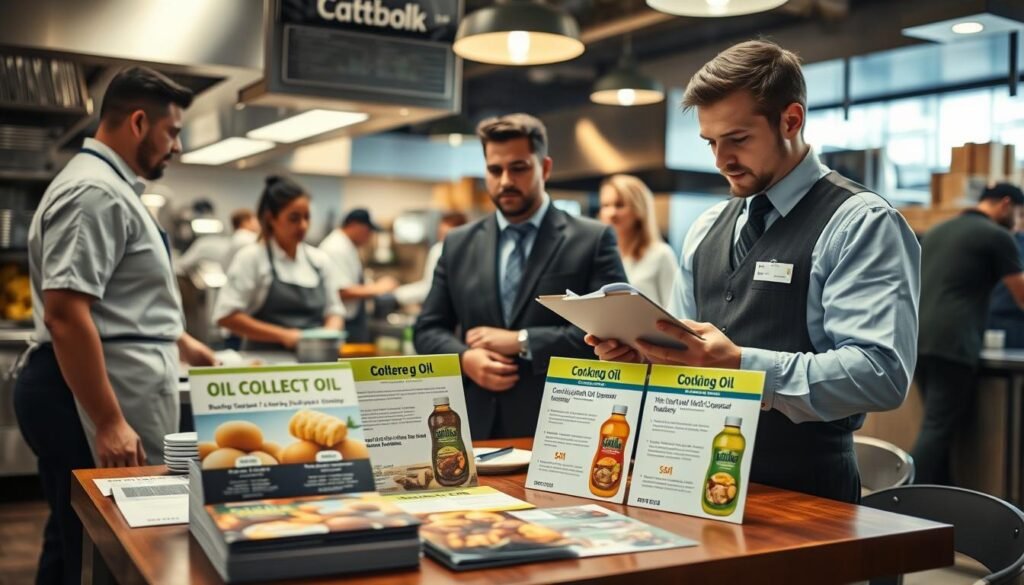
Finding the right partner for your restaurant’s oil management is crucial. The right provider affects your operations, finances, and environmental impact. Many restaurants face challenges in finding reliable used cooking oil collection services. This guide helps you choose a provider that understands your needs.
Key Questions to Ask Potential Providers
Before you sign anything, ask potential partners detailed questions. Knowing how they operate helps you make a smart choice for your restaurant.
- What experience do you have with restaurants similar to mine?
- How often can you schedule restaurant oil pickup services?
- What documentation do you provide for each collection?
- How do you handle emergency requests?
- What certifications do your grease trap service providers hold?
- Can you provide references from current clients?
- What is your response time for service calls?
- Do you offer flexible scheduling options?
The answers to these questions show how cooking oil disposal companies work. We recommend comparing answers from different providers to find the best fit for your needs.
Importance of Industry Experience
Experience is key when choosing used cooking oil collection services. Providers familiar with restaurants understand your specific challenges. They know about busy cooking times, storage limits, and rules.
| Provider Quality Factor | Why It Matters | What to Look For |
|---|---|---|
| Years in Business | Established companies have proven track records | At least 5+ years serving restaurants |
| Client References | Current customers validate service quality | Three to five verifiable references |
| Certifications | Shows commitment to standards and regulations | EPA compliance and industry certifications |
| Service Flexibility | Accommodates your operational schedule | Multiple pickup options each week |
| Documentation Systems | Ensures compliance and accountability | Digital tracking and detailed reports |
Grease trap service providers with deep knowledge offer more than just collection. They know local environmental rules and help you follow them. This saves you time and keeps your business safe from fines.
Choose providers who invest in staff training and modern equipment. This shows their commitment to professional service. Working with experienced providers means you get a reliable partner for your business’s growth.
The Future of Oil Collection in Restaurants
The restaurant industry is on the brink of a new era in waste management. Our kitchens are getting smarter, cleaner, and greener every day. The way we recycle cooking oil in restaurants is changing fast.
New technologies and growing environmental awareness are leading the way. Restaurants are now looking for ways to make waste management beneficial for both their business and the planet.
Trends in Sustainability
Sustainability is becoming a key focus in restaurants. Facilities are finding that commercial kitchen oil recycling helps achieve environmental goals. Used cooking oil is now turned into biofuel and other valuable products.
Several important trends are emerging:
- More biofuel production from waste cooking oil
- Less waste sent to landfills
- More partnerships between restaurants and recycling providers
- Introduction of zero-waste kitchen programs
- Investment in renewable energy
These changes help restaurants cut their carbon footprint and save money at the same time.
Predictions for Provider Innovations
Technology is changing the face of restaurant cooking oil recycling services. Automation is set to become the norm in the next few years. Smart systems will track oil levels and schedule pickups automatically.
Future innovations will include:
- Real-time oil quality monitoring systems
- Automated scheduling based on data analytics
- Mobile apps for waste tracking and reporting
- Enhanced filtration technologies for better oil recovery
- Integration with restaurant management software
Restaurant waste oil management will become more data-driven. Providers will offer detailed insights into waste streams. These advancements in commercial kitchen oil recycling will greatly improve recovery rates.
We urge restaurant owners to keep up with these emerging trends. Knowing what’s coming helps you get ready for the next wave of waste management solutions.
Conclusion: Making an Informed Decision
In this article, we’ve looked at why many restaurants are switching their oil collection providers. This change can improve their operations in many ways. It affects their profits, food safety, and how they care for the environment.
We’ve talked about the importance of choosing the right partner for used fryer oil collection. This choice can make a big difference in your restaurant’s success. We’ve shared examples of how making the right choice can lead to better results.
The restaurant industry is under a lot of pressure to work better and keep food safe. Knowing why restaurants are changing their oil collection providers can help you make a good choice for your place.
Key Takeaways for Restaurant Owners
It’s time to check if your current practices are working well. Here are some important things to think about:
- How reliable and good your current provider is
- If they follow local environmental rules
- The total cost and any hidden fees
- If they use technology to track oil levels
- How much experience they have and what others say about them
Taking Action Today
It’s time to see if your current oil collection service is right for you. Get quotes from other providers, ask them lots of questions, and maybe even meet with them. Your choice now can help your restaurant succeed for a long time.
We think making smart choices leads to better results. Start improving how you manage your oil today.
FAQs About Oil Collection Providers
Restaurant owners have many questions about managing cooking oil waste. We know how hard it is to find the right partner for oil disposal. Our team has answers to common questions about used cooking oil collection and kitchen management.
Common Questions from Restaurant Owners
Many owners ask about restaurant cooking oil recycling and its benefits. They wonder about pickup frequency, pricing, and compliance. Knowing these details helps you choose wisely for your waste management.
- How often should we schedule pickups for used cooking oil?
- What are the environmental benefits of proper oil recycling?
- Do we need special permits for oil storage?
- Can we switch providers mid-contract?
- What safety standards apply to oil collection?
- How much should oil collection cost monthly?
Pickups are usually needed every 2-4 weeks, based on your cooking volume. Cooking oil disposal companies handle the oil’s journey to become biodiesel or other products. Make sure your provider has the right licenses and insurance.

Guidance on Oil Management
Good oil management keeps your kitchen safe and supports the environment. Used cooking oil collection services offer more than just waste removal. They ensure you follow the rules and keep your kitchen clean.
| Management Practice | Benefit | Frequency |
|---|---|---|
| Regular Oil Filtering | Extends oil lifespan and reduces waste | Daily |
| Scheduled Pickups | Prevents overflow and fire hazards | Every 2-4 weeks |
| Temperature Monitoring | Maintains food quality standards | Every shift |
| Container Inspection | Ensures safe storage conditions | Weekly |
| Compliance Audits | Confirms adherence to regulations | Quarterly |
Restaurant cooking oil recycling turns waste into valuable resources. By choosing the right provider, you ensure your oil disposal meets all rules. This shows your restaurant’s commitment to being professional and caring for the environment.
Contact Us for More Information
Finding the right support for your restaurant’s oil management needs is easy. Our team knows every kitchen is unique. We help restaurants of all sizes find solutions that fit their budget and goals.
Need help with grease trap service providers or commercial kitchen oil recycling? We’re here to guide you.
Ways to Reach Our Team
Getting in touch with us is simple. Choose the method that fits your schedule best. Our experts are ready to answer your questions about commercial kitchen oil recycling.
- Send us an email with your questions and concerns
- Call our customer service line during business hours
- Request a consultation for personalized guidance
- Visit our website for instant chat support
- Schedule a meeting with our specialists
Additional Resources and Guidance
We offer more than just direct contact. Our resources help you make informed decisions about oil management. Find guides on selecting grease trap service providers and commercial kitchen oil recycling best practices.
Visit our resource center for educational materials, industry reports, and tips for optimizing your kitchen operations.
| Contact Method | Best For | Response Time |
|---|---|---|
| Email Support | Detailed questions and documentation | 24 hours |
| Phone Line | Urgent issues and quick answers | Same day |
| Live Chat | Quick questions during business hours | 15 minutes |
| Consultation Booking | Custom kitchen assessments | 2-3 business days |
We believe quality service begins with understanding your needs. Our team is dedicated to helping you find the right solutions for your restaurant. Reach out today to improve your oil management practices.
Call to Action for Oil Management Support
We offer detailed help for restaurant owners to manage their waste oil better. Our team knows the challenges of handling used cooking oil. We aim to make your operations smoother and your decisions about oil pickup better.
Resources for Restaurant Owners
Our site has tools and guides to improve your oil management. You can learn about the best ways to collect, store, and dispose of oil. We also share tips on choosing the right oil pickup services for your restaurant.
We focus on education to help you make smart choices. Our advice covers food safety, environmental protection, and waste reduction. Our goal is to give you the knowledge to boost your restaurant’s success.
Contact Information for Questions
Got questions about managing waste oil or need help with oil pickup? Our team is here to assist. Contact us for personalized advice. We’re eager to help and provide solutions tailored to your needs. Reach out today to improve your restaurant’s oil management.